Oravelin Press
01 — Editorial Focus

Observing the Rhythm of Daily Movement

An independent publication examining the relationship between everyday activity and weight balance — without the noise of high-intensity agendas.

Early morning park path lined with mature trees, dappled sunlight filtering through canopy, empty footpath suggesting a quiet walking route in a London green space

London — Field Notes, 2026

Daily Movement Rhythm· Low-Impact Activity· Step Count & Weight Balance· Functional Movement Patterns· Energy Balance Through Steps· Outdoor Activity Practice· Sustainable Movement· Morning Movement Window· Gentle Mobility Work· Non-Gym Fitness· Household Activity· Daily Movement Rhythm· Low-Impact Activity· Step Count & Weight Balance· Functional Movement Patterns· Energy Balance Through Steps· Outdoor Activity Practice· Sustainable Movement· Morning Movement Window· Gentle Mobility Work· Non-Gym Fitness· Household Activity·
02 — Featured Reading

Recent Articles

03 — Reference Points
8,000
Daily steps associated with weight management in peer-reviewed research
30 min
Moderate-paced walking producing measurable energy output per session
12 wks
Consistent low-impact routine window before habit formation is recorded
Movement breaks per workday associated with improved afternoon energy
04 — Coverage Areas

What This Publication Covers

01

Walking and Step Count

The relationship between daily step count, walking pace, and weight balance. This publication tracks published research on how low-intensity ambulatory activity intersects with energy expenditure — without the language of extreme outcomes.

02

Household and Incidental Activity

Notes on how everyday domestic movement — standing, stretching, tidying, climbing stairs — contributes to the total activity picture. Field observations from London households and workspace environments.

03

Outdoor and Park-Based Movement

London has an extensive network of public green spaces. This section examines park-based activity rhythms, the role of outdoor environments in sustaining consistent movement habits, and observations from regular walkers and cyclists.

04

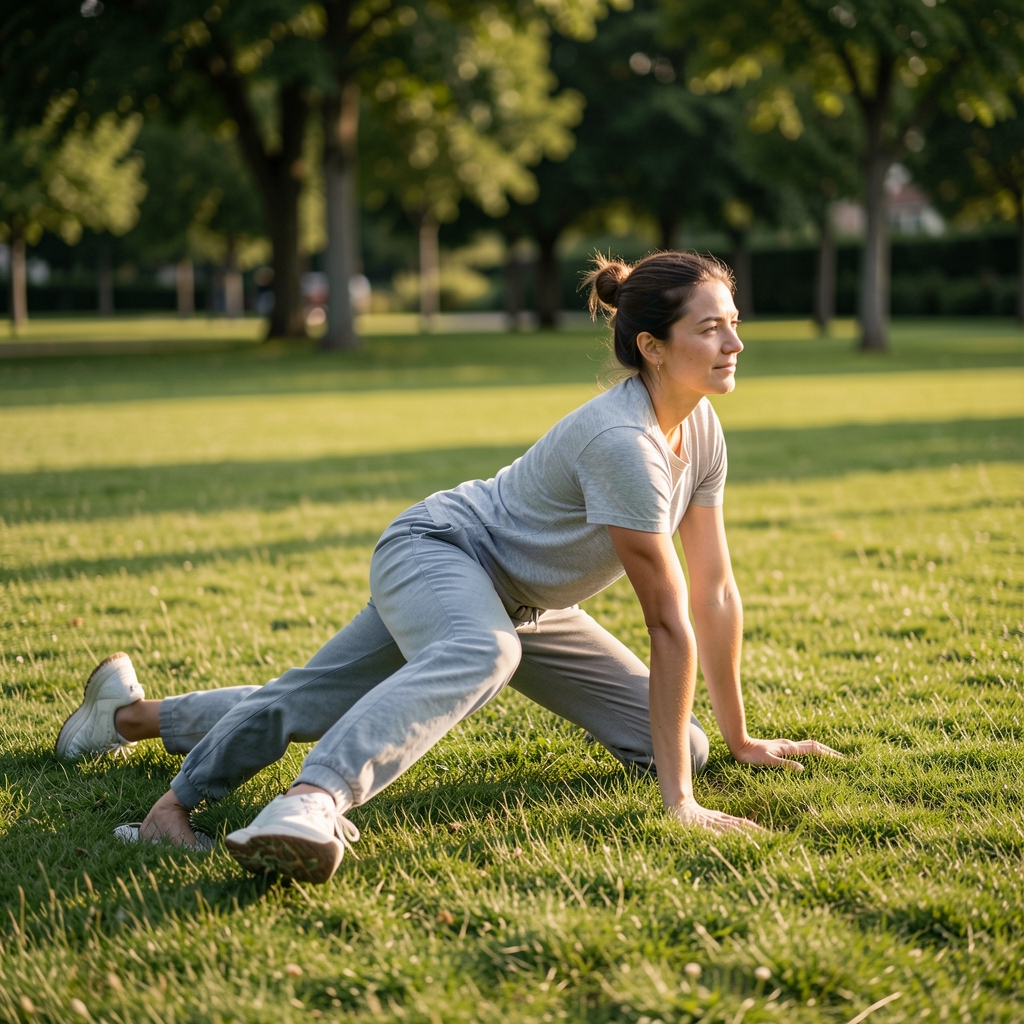
Stretching, Mobility and Morning Routines

A slower register within the broader topic: how flexibility work and morning movement practices build the physical readiness that makes sustained daily activity easier over weeks and months.

05 — Editorial Note
"There is a consistent pattern in the research: the body that moves gently, every day, across weeks and months, maintains a different relationship with energy than the one that reserves all exertion for the weekend."
EDITORIAL BOARD — ORAVELIN PRESS, 2026
Overhead view of a notebook open to a page of handwritten movement observations, a wooden pencil beside it, on a pale green linen surface in natural window light
Field Notes
Bright editorial office interior with exposed brick, floor-to-ceiling bookshelves, a large wooden desk covered with printed research papers and two open laptops, afternoon sunlight through tall windows
06 — About the Publication

An Independent Voice on Everyday Activity

Oravelin Press began as a response to a particular gap in published wellness content: the space between high-intensity fitness culture and the quieter, evidence-informed literature on how ordinary movement shapes long-term weight balance.

This publication does not advocate for any specific product, programme, or commercial approach. Its editorial scope is limited to the observation and analysis of low-impact, non-gym movement patterns — walking, stretching, household activity, outdoor practice — and their relationship with sustained energy balance.

All articles are reviewed under a two-editor standard before publication. Source citations are included where available. The editorial team is based in London, EC1.

About Oravelin Press

07 — Common Questions

Questions on Movement and Weight

The questions below represent recurring themes in reader correspondence and in published commentary on low-impact activity and weight balance.

The evidence base points to yes — with important context. Published research consistently indicates that moderate, sustained activity contributes to energy balance over time. The key variable is consistency over weeks rather than intensity in a single session. Low-impact approaches such as daily walking accumulate a meaningful energy contribution without the recovery burden of high-output training.
Step count is a useful proxy for total ambulatory activity. Research published in peer-reviewed journals has noted associations between daily step totals in the range of 7,000 to 9,000 and favourable body composition outcomes over time. The measure is not a direct proxy for weight but reflects a broader pattern of physical engagement with the day.
Non-exercise activity thermogenesis — the energy expended through ordinary activity that is not deliberate exercise — contributes a substantial share of daily energy output for most people. Domestic tasks, standing at a desk, climbing stairs, and brief walks to and from transport can collectively match or exceed a short structured workout in terms of energy contribution.
Stretching and mobility work are primarily associated with physical readiness and range of motion rather than direct energy expenditure. Their relevance to weight balance is indirect: a body that moves comfortably is more likely to sustain consistent daily activity. Morning mobility routines also appear to be associated with higher total daily step counts in observational research.
Oravelin Press follows an evidence-informed editorial standard. Articles draw primarily on published research available in accessible journals and databases. Where specific studies are cited, they are identified by author and year. The editorial board reviews source quality before publication. For a full account of the methodology, see the Methodology page.